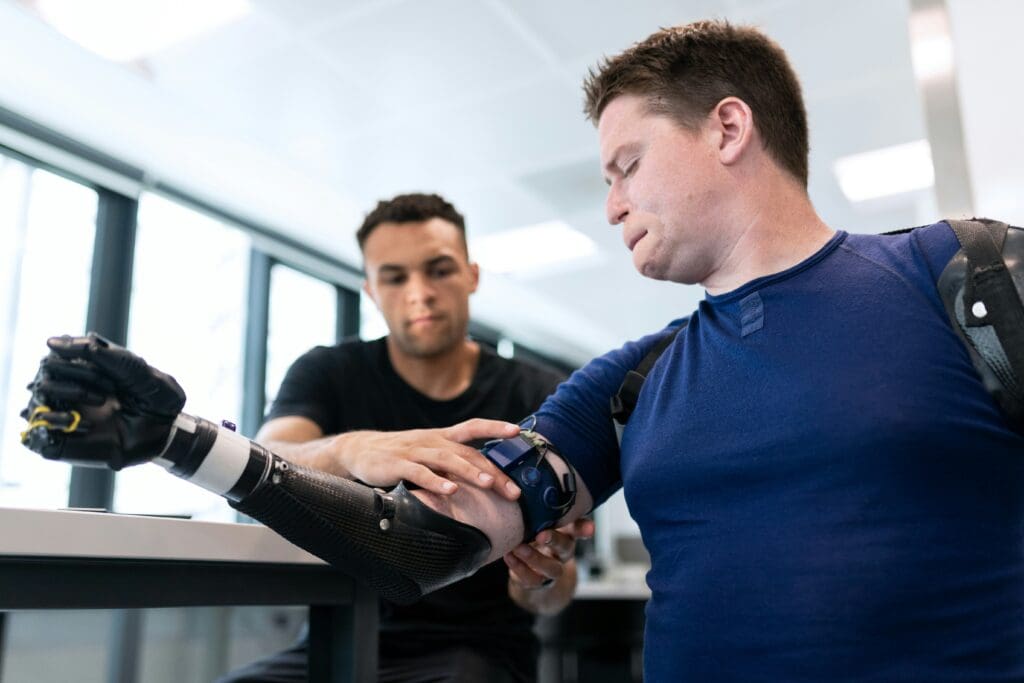
Current prosthesis design processes offer limited personalisation, often resulting in socket fitting challenges, reduced comfort, and suboptimal device performance for patients. These limitations increase design iteration time, add manufacturing costs, and can negatively affect rehabilitation outcomes.
This project will develop an AI-driven prosthesis design platform that recommends personalised device configuration parameters based on comprehensive patient data, including medical history, amputation characteristics, residual limb condition, anatomical measurements, physical capability, cognitive factors, lifestyle requirements, and environmental context. By learning from relevant datasets, the AI model will generate design recommendations intended to improve prosthesis fit, functionality, and user experience.
The AI system will be integrated into a web-based computer-aided design (CAD) platform for 3D-printed prostheses, supporting clinicians and designers throughout the design and manufacturing workflow. The platform will enable visualisation of generated prosthesis designs, reduce manual design effort, accelerate production cycles, and support more consistent personalised prosthesis development.
The commercial opportunity lies in an intelligent digital design platform that combines AI-driven personalisation with additive manufacturing workflows, addressing the growing demand for patient-specific medical devices. By improving the efficiency of prosthesis development and supporting clinicians with data-driven recommendations, the technology has the potential to advance personalised rehabilitation and create a scalable biomedical innovation platform.